The plan
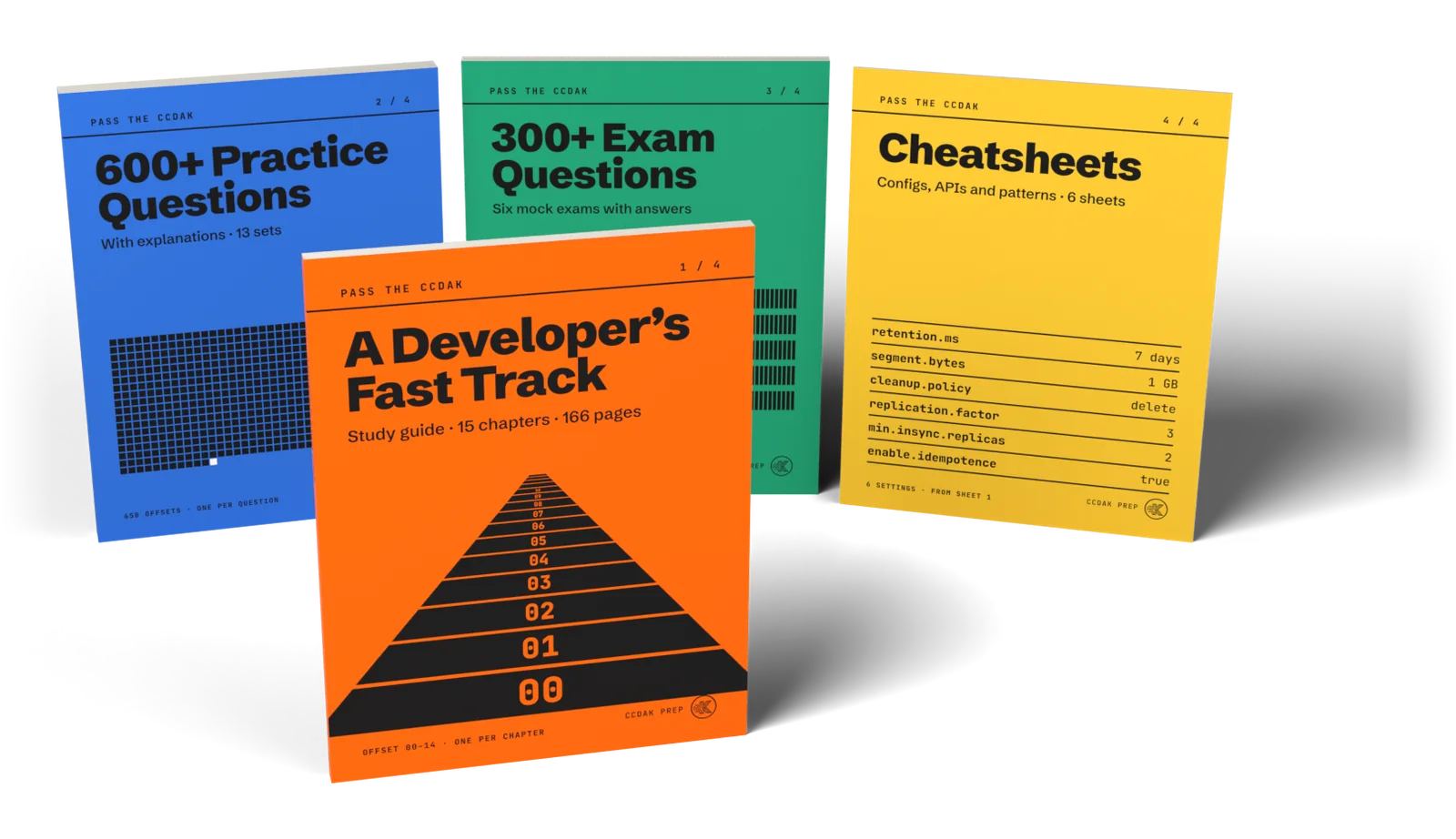
Count on 40 to 60 hours in total, so ten to fifteen a week. Each week you read a few chapters of the study guide and do their practice questions.
| Week | Read | Practice |
|---|---|---|
| 1 | Fundamentals · Brokers, Topics and Storage · Producers · Consumers and Consumer Groups · Errors and Retryability | The question sets for those chapters |
| 2 | Schemas and Serialization · The Admin Client · Kafka Internals · Reliable Delivery · Exactly Once | The question sets, then mock exam 1 |
| 3 | Kafka Connect · Security · Administration · Monitoring · Kafka Streams | The question sets, then mock exam 2 |
| 4 | The cheatsheets, and the chapters behind your wrong answers | Mock exams 3 to 6, one every other day |
What a study day looks like
Read one chapter of the study guide, which takes about an hour, and then do its question set without looking back at the chapter. Read every explanation afterwards, and note the configuration defaults you got wrong next to the matching cheatsheet.
Why this order
The first two weeks cover what the blueprint weights most, which is how Kafka stores, replicates and delivers data and how producers and consumers behave. Connect, security and Streams build on that, so they come in week three. You can see the weights on the exam topics page.
Keep it short
If you stretch this over months, you'll forget the early chapters before you get to the exam. And if you already run Kafka in production, the two-week plan skips most of what you know.
Before you book
We'd book the exam once you've scored comfortably on two mock exams in a row. The exam guide explains the format and the 7-day wait before a retake.